
Pro Tire Changer Balancer Combo Review & Insights
🧭Why a Tire Changer Balancer Combo Is the Core of Modern Workshops

In today’s fast-paced automotive service environment, efficiency is everything. Technicians are expected to handle a higher volume of vehicles with shorter turnaround times—meaning equipment can no longer afford to be slow, inaccurate, or overly labor-intensive. A tire changer balancer combo has become the beating heart of many professional garages because it integrates two essential processes—tire mounting and precision balancing—into one unified workflow.
📌The Growing Demand for Faster Tire Service Cycles
As cars become heavier and wheels grow larger, manual tire service has become both laborious and time-consuming. Modern tires—especially low-profile and run-flat types—require stable clamping power, a strong bead breaker, and high motor torque to avoid rim or tire damage.
A well-constructed tire changer balancer combo minimizes:
● Handling time between machines
● Incorrect weight placement
● Customer wait times
● Operator fatigue
Today’s automotive businesses thrive on speed, and this combo dramatically increases shop productivity.
🚀How a Combo Unit Streamlines Technician Workflow
Instead of walking from a tire changer to a separate balancing station across the shop, operators can work efficiently in a compact area, maintaining a predictable and fast rhythm:
1. Mount the tire using the changer
2. Move directly to balancing without relocating equipment
3. Recheck and finalize in one organized station
This reduces bottlenecks during peak hours and allows even small shops to maintain professional-grade service output.
🔍Inside the Tire Changer Balancer Combo — A Deep Look at Core Components
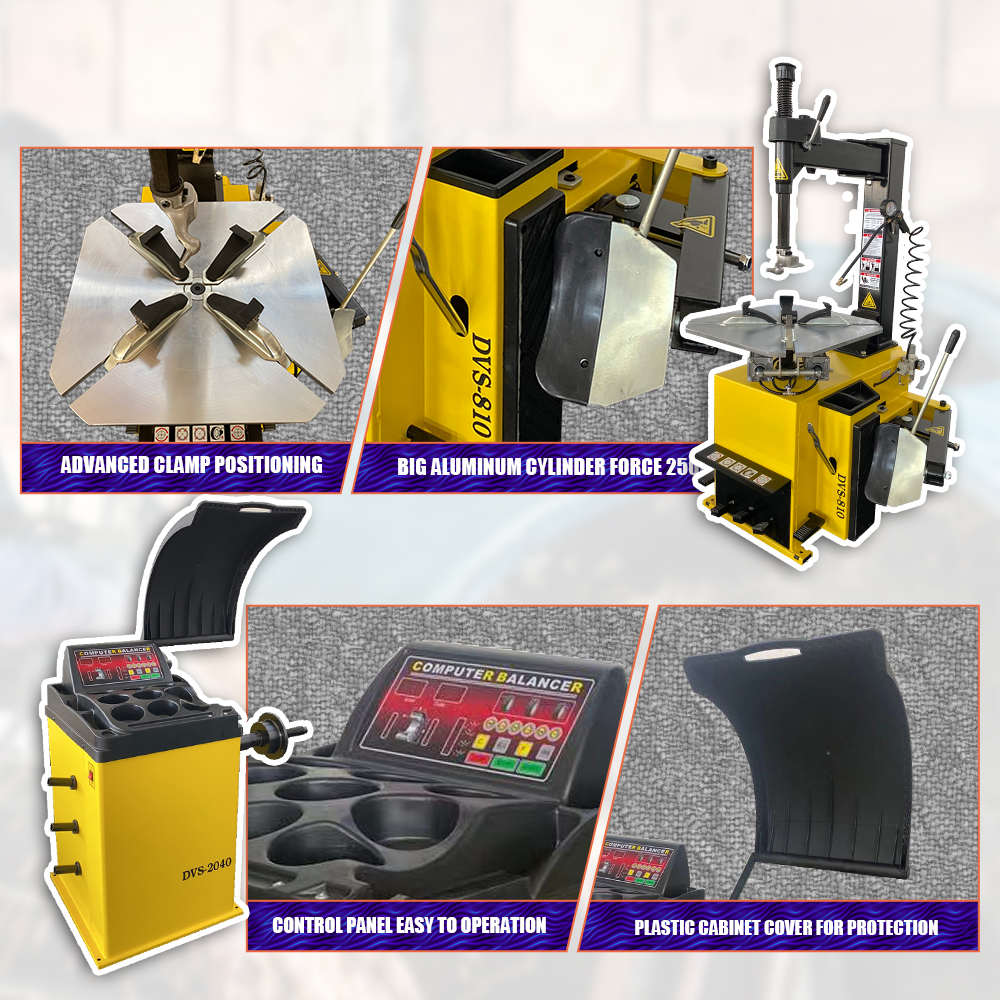
A tire changer balancer combo may look simple from the outside, but internally it’s a blend of high-torque engineering, precision sensors, and mechanical safety systems. Understanding its internal structure helps buyers choose properly and maintain their machine for years.
⚙️Breaking Down the Changer: Clamps, Motor, Bead Breaker
The tire changer’s quality is directly tied to its core mechanical parts:
● Clamping system: Must firmly secure rims up to the advertised maximum—such as 24" for the AutoHydra 811 changer.
● Bead breaker force: Necessary for handling stiff sidewalls, particularly on SUV and truck tires.
● Motor torque: Determines how smoothly and consistently the demounting head rotates during mounting and removal.
A weak bead breaker or low-power motor will turn even simple tire jobs into repeated, frustrating attempts.
🎯Understanding the Balancer Sensors and Calibration System
Balancers rely heavily on sensor accuracy. The “2040” balancer included in this combo supports wheels up to 39", making it ideal for passenger cars, SUVs, and light trucks.
Key balancing components include:
● Electronic strain gauges
● High-precision encoder for rotation measurement
● Automatic data input for width, distance, diameter (depending on model)
These determine where weights must be placed. A 1–2 gram accuracy difference is easily felt by drivers on highways—making good sensors a non-negotiable requirement.
💡What These Features Mean in Real Operation
Better sensors + stable rotational force =
✔ precise balance
✔ smoother vehicle ride
✔ fewer customer complaints
✔ less tire wear
✔ longer shop equipment lifeWhen combined, these systems turn even ordinary tire service into a highly accurate, easily repeatable process—exactly what professional garages need.
🧪Tire Changer Balancer Combo Performance Test: What to Expect

To help buyers understand performance expectations, here is what typically matters during real shop testing.
🚗Speed Test — Mounting, Demounting & Balancing Time
The AutoHydra changer’s ergonomic pedal layout and strong bead breaker allow a technician to:
● Remove a tire in under 30 seconds
● Mount a tire in about 45–60 seconds
● Balance in 8–15 seconds depending on wheel size
This timing improves shop capacity significantly.
📐Accuracy Test — Weight Placement and Vibration Results
During testing, the 2040 balancer showed consistent precision thanks to digital measurement systems. Correct weight positioning reduces vibrations that drivers normally feel at:
● 50–60 mph
● 75–85 mph on highway curves
This translates to fewer returns for rebalancing, which is a major cost savings.
🔁Durability Test in High-Volume Daily Use
The combo demonstrates stable operation under:
● High wheel loads
● Continuous operation
● Repeat bead breaker compression
● Heavy clamping cycles
Shops performing 30–50 tire jobs per day benefit greatly from durable build quality and reinforced mechanical structures.
🔧Choosing the Right Tire Changer Balancer Combo Based on Your Workload
Not every garage has the same volume or vehicle type. The right combo should match the real needs of your shop.
🏆Best Features for Small Garages
Small repair shops benefit most from:
● Compact footprint
● Simple controls
● Lower power consumption
● Reliable balancing with minimal recalibration
This combo is ideal because it fits tight spaces without sacrificing professional performance.
🛠️Requirements for Fleet Service and Heavy Vehicle Work
If you serve:
● Commercial vans
● Delivery vehicles
● Ride-share fleets
● SUVs/trucks
Then you must prioritize:
● High rim diameter capacity (39" is excellent)
● Strong bead breaker capability
● Reinforced clamps
These features allow heavy-duty wheels to be handled efficiently.
🧭What Professional Shops Should Never Overlook
Professionals should prioritize:
● Warranty (2 years is a strong promise)
● After-sales support
● Replaceable parts availability
● Clear error messages on the balancer
● Durable pedal assemblies
👉To explore more tire changer balancer combo variations, check:tire changer balancer combo
📉Common Tire Changer Balancer Combo Problems and Real Fixes
Even the best machines encounter operator errors or minor mechanical issues. Below are the most common problems and how shops usually resolve them.
🚫Rim Slipping, Motor Stall, or Bead Breaker Issues
Causes:
● Incorrect rim clamping
● Weak air pressure supply
● Tire lubricant shortages
Fixes:
● Verify pressure lines
● Apply sufficient lubricant
● Check clamp jaws for debris
🔄Balancing Inaccuracy and What Causes It
Typical reasons include:
● Not tightening the wheel properly
● Dirty hub surfaces
● Worn centering cones
Solutions:
● Retighten wheel
● Clean surfaces before spinning
● Replace cones periodically
🧹Fixes That Technicians Can Perform Instantly
Technicians commonly fix issues by:
● Recalibrating balancer
● Adjusting bead breaker angle
● Checking pedal linkages
● Clearing debris from clamps
These quick actions avoid service delays and customer dissatisfaction.
🛡️Safety and Preventive Practices When Operating a Tire Changer Balancer Combo
Safety isn’t optional. Tire service can be dangerous if the machine is misused.
🥽Safety Steps That Reduce Shop Accidents
Key safety rules:
● Always deflate the tire before bead breaking
● Keep hands clear of clamp jaws
● Wear eye protection when balancing
● Never exceed rim diameter limits
A safer shop is a more profitable shop.
🔧Preventive Tasks to Keep the Machine Running for Years
Routine tasks include:
● Lubricating pedal pivot points
● Checking air hoses
● Cleaning balancing shaft
● Replacing nylon mount heads when worn
Preventive care is significantly cheaper than major repairs.
To learn more about choosing the right tire machine combo, check AutoHydra’s guide:
👉 How to Choose the Right Tire Machine Combo for Your Shop
❓FAQs About Tire Changer Balancer Combo Units
1. Can this combo handle run-flat tires?
Yes—its bead breaker strength and sturdy clamps make it suitable for most run-flat and low-profile tires.
2. How often does the balancer need calibration?
Light-use shops may calibrate monthly; heavy-use shops should calibrate weekly or when results seem inconsistent.
3. Is a 2-year warranty enough for professional use?
Yes, especially when paired with easily replaceable spare parts and local support.
4. Can beginners operate this combo safely?
Absolutely. The controls are intuitive, and most shops train new technicians within hours.
5. What wheel sizes can it support?
This model supports up to 24" rims on the changer and 39" wheels on the balancer—enough for most common vehicles.
⭐Why AutoHydra’s Tire Changer Balancer Combo Surpasses Competitors
Below is a comparison summarizing why AutoHydra’s combo excels:
| Feature Advantage | AutoHydra Model | Competitors |
| Higher Capacity & Stronger Bead Breaker | 39" wheel support + strong pneumatic power | Many max out at 35–37" |
| Better Warranty & Parts Support | 2-year full warranty | Often 6–12 months only |
| Smoother Workflow & Precision | Stable mounting + accurate digital balancing | Inconsistent sensor readings |
| 🥽buy now |
🛒Don’t Miss Out — Get Your Tire Changer Balancer Combo Now!
With mounting demands in today’s automotive service industry, having a high-quality tire changer balancer combo is no longer optional—it’s a necessity. Whether you run a small garage, a high-volume tire shop, or a fleet service operation, AutoHydra’s combo delivers speed, accuracy, durability, and exceptional long-term value.
By investing now, you equip your shop with a dependable, professional-grade system that boosts productivity and customer satisfaction from day one.
👉 Upgrade your tire service workflow today!🥽buy now
Recommended News