
Vehicle Lifting Equipment Complete Guide Professional Automotive Lift Solutions
Introduction
When it comes to professional automotive service and repair operations, having the right vehicle lifting equipment is essential for delivering quality work efficiently and safely. At Auto-Hydra, we specialize in providing comprehensive automotive lifting solutions featuring professional-grade vehicle lifting equipment designed for shops, service centers, and automotive facilities of all sizes. Whether you operate a small repair garage, manage a multi-bay service center, or run a professional automotive workshop, investing in quality vehicle lifting equipment ensures reliable performance, enhanced productivity, and improved technician safety. The foundation of any successful automotive service operation begins with dependable lifting equipment that can handle the demands of daily professional use while providing the flexibility and reliability that technicians require.
Vehicle lifting equipment represents one of the most critical investments in automotive service operations, directly impacting the efficiency of every repair, the safety of technicians, and the quality of service delivered to customers. Auto-Hydra’s selection of vehicle lifting equipment includes models designed to meet diverse requirements, from compact two-post lifts for limited spaces to comprehensive four-post lifts for heavy-duty applications. Our equipment is engineered to meet or exceed industry safety standards while delivering the performance and durability that professional automotive operations demand.
1. Understanding Vehicle Lifting Equipment
Vehicle lifting equipment encompasses a broad category of mechanical systems designed to safely elevate automobiles and light trucks for inspection, maintenance, and repair operations. These essential pieces of automotive shop equipment come in various configurations, each designed to address specific operational requirements and workspace constraints. Understanding the different types of vehicle lifting equipment available helps facility managers and service operators make informed decisions when selecting lifting solutions for their operations.
The fundamental purpose of vehicle lifting equipment is to provide safe, stable access to the undercarriage and wheel wells of vehicles for inspection, repair, and maintenance tasks. Professional-grade lifting equipment must meet stringent safety standards, including requirements for structural integrity, weight capacity, locking mechanisms, and emergency operation. Quality vehicle lifting equipment features robust construction using high-strength steel, precision-engineered hydraulic systems, and comprehensive safety features that protect both technicians and vehicles during lifting operations.
📌1.1 Key Features and Design Elements
Professional vehicle lifting equipment incorporates specialized features that ensure safe, reliable operation in demanding automotive service environments. Heavy-duty steel construction provides the structural integrity needed for repeated lifting cycles, with reinforced columns, arms, and base plates designed to withstand the stresses of heavy vehicle loads. Quality lifting equipment features surface treatments including powder coating or industrial finishes that protect against corrosion, chemical exposure, and wear from daily professional use.
Hydraulic systems in professional vehicle lifting equipment are engineered for consistent, reliable performance with quality components that ensure smooth lifting and lowering operation. Modern lifting equipment may incorporate electric hydraulic systems, air hydraulic combinations, or fully mechanical systems depending on the design and application requirements. Control systems typically include pendant controls, foot pedals, or centralized operation panels that enhance operator convenience while maintaining precise control over lifting operations. Safety features generally include automatic arm restraints, spring-loaded safety locks, over-pressure protection, and synchronization systems that meet or exceed industry standards for automotive lifting equipment.
📌1.2 Types of Vehicle Lifting Equipment
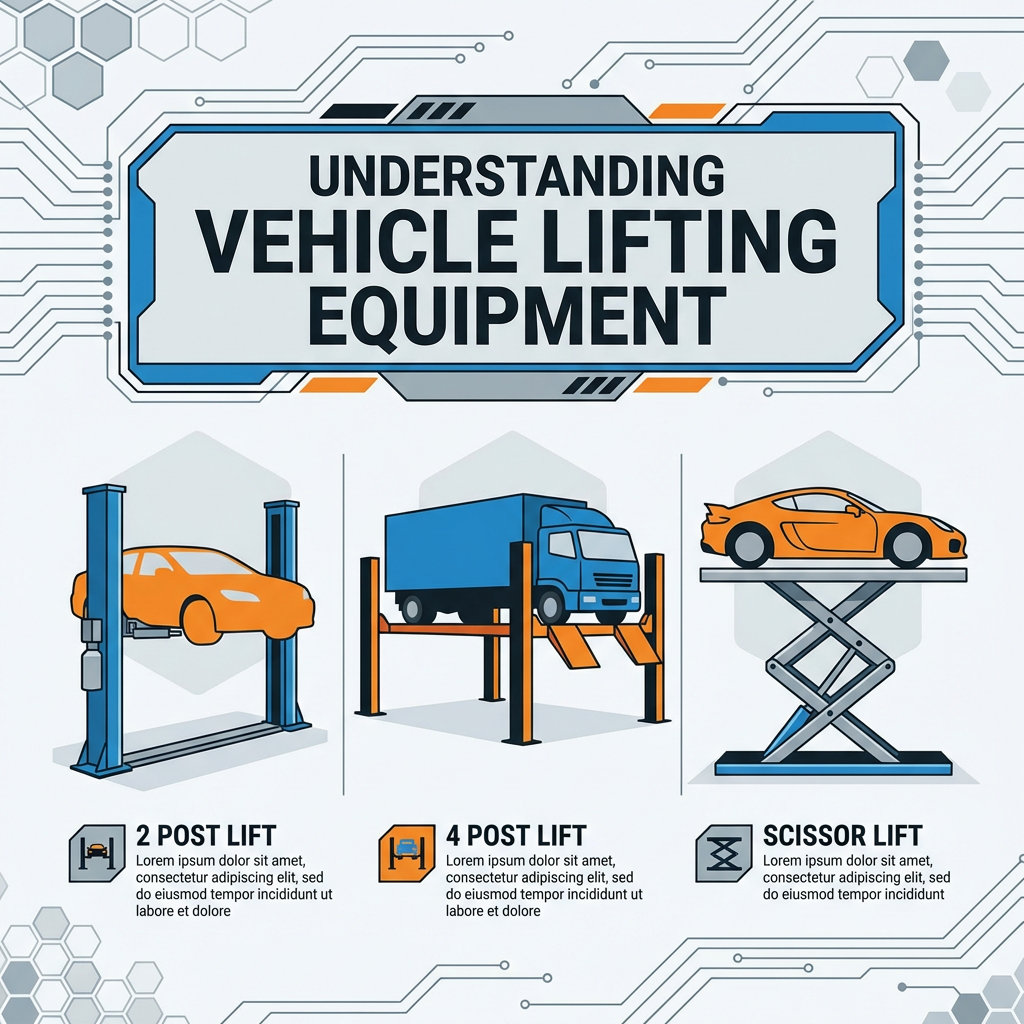
Two-post surface-mounted lifts represent the most common type of vehicle lifting equipment found in professional automotive service facilities. These lifts feature two vertical columns with symmetric or asymmetric arms that engage the vehicle’s lift points, providing stable elevation for a wide range of service operations. Two-post lifts offer efficient floor space utilization and excellent access to vehicle undercarriages, making them ideal for general repair and maintenance operations.
Four-post lifts provide enhanced stability and weight capacity, featuring four supporting columns connected by runways that support the vehicle’s wheels. These lifts are particularly well-suited for wheel service operations, tire rotation, and applications requiring extended working time at elevation. Four-post lifts offer easier vehicle positioning and simpler operation compared to two-post designs, making them popular for tire service centers and alignment operations.
Scissor lifts offer compact, low-profile lifting solutions ideal for facilities with limited space or ceiling height constraints. These lifts raise vehicles using a scissor mechanism rather than vertical columns, providing a minimal footprint while still delivering essential lifting capability. Scissor lifts are available in surface-mounted, in-ground, and portable configurations to meet diverse facility requirements.
📌1.3 Weight Capacity and Lift Specifications
Vehicle lifting equipment is available in various weight capacities ranging from 7,000 pounds for standard passenger vehicles to 18,000 pounds or more for heavy-duty truck and commercial vehicle applications. When evaluating lifting equipment, consider both the rated capacity and the actual weight of vehicles you regularly service, selecting capacity with adequate margin for safe operation. Professional recommendations suggest selecting lifts with capacity ratings at least 30 percent higher than your heaviest expected vehicle load.
Lift height specifications determine the maximum elevation achievable and directly impact working clearance for undercarriage access. Most two-post lifts offer maximum lift heights ranging from 60 to 78 inches, while four-post lifts may reach heights of 80 inches or more. Consider ceiling constraints, overhead door clearances, and desired working positions when evaluating lift height specifications for your facility.
2. Benefits of Professional Vehicle Lifting Equipment
Investing in quality vehicle lifting equipment delivers significant advantages for automotive service operations of all sizes. Understanding these benefits helps facility managers and service operators recognize the value of professional-grade lifting equipment and make informed purchasing decisions that support long-term operational success.
The primary benefit of professional vehicle lifting equipment lies in its ability to enhance technician productivity and efficiency. Quality lifts enable faster vehicle positioning, reliable height adjustment, and stable working platforms that allow technicians to complete service tasks more efficiently. This improved productivity translates directly to increased throughput and revenue potential for service operations.
➡️2.1 Enhanced Safety and Compliance
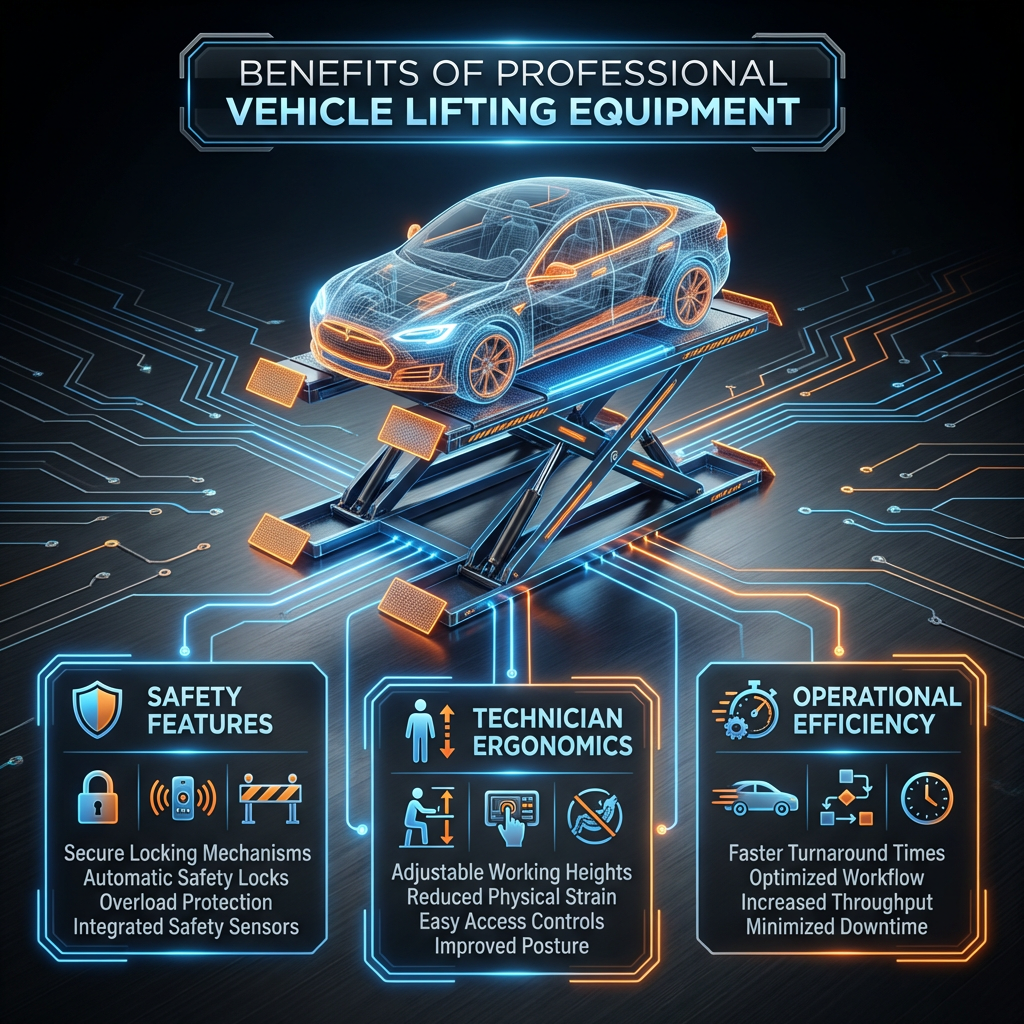
Professional vehicle lifting equipment incorporates comprehensive safety features designed to protect technicians, vehicles, and facilities during lifting operations. Quality lifts meet or exceed industry safety standards including ASME and ALI certification requirements, ensuring compliance with regulatory requirements and insurance considerations. Automatic safety locks, synchronization systems, and overload protection features provide multiple layers of safety that protect against equipment failure and operational errors.
Regular inspection and maintenance of vehicle lifting equipment further enhances safety performance. Quality equipment is designed for easy inspection and maintenance access, with clear indicators for wear, damage, or performance degradation that might compromise safety. Establishing regular maintenance schedules and documenting inspection results supports ongoing safety compliance and equipment longevity.
➡️2.2 Improved Ergonomics and Technician Comfort
Proper lifting equipment reduces physical strain on technicians by positioning vehicles at comfortable working heights, eliminating the need for awkward postures, excessive bending, or working in uncomfortable positions. Ergonomic working conditions reduce fatigue, decrease injury risk, and improve overall job satisfaction for service technicians. Quality lifting equipment allows technicians to work efficiently for extended periods without the physical discomfort associated with ground-level or improvised lifting solutions.
The improved access provided by professional vehicle lifting equipment also enhances the quality of service delivered. Technicians can thoroughly inspect undercarriage components, access hard-to-reach areas, and perform repairs with greater precision when working at optimal heights. This improved access supports more comprehensive service delivery and reduces the likelihood of overlooking potential issues during inspections.
➡️2.3 Operational Efficiency and Throughput
Professional vehicle lifting equipment contributes directly to improved operational efficiency and throughput for automotive service operations. Quality lifts enable faster vehicle positioning and retrieval, reducing cycle times for each service operation. The stability and reliability of professional lifting equipment minimize downtime associated with equipment issues or safety concerns, supporting consistent workflow throughout the service day.
Space efficiency represents another significant advantage of quality vehicle lifting equipment. Professional lifts maximize available service bay space by providing vertical lifting that eliminates the need for drive-on ramps or surface space reserved for approach angles. This efficient space utilization allows facilities to accommodate more service bays or additional equipment within the same footprint.
3. Applications and Use Cases
Vehicle lifting equipment serves diverse automotive applications across numerous operational contexts. The professional performance and reliability of quality lifting equipment make it suitable for both primary lifting operations and specialized service requirements.
General repair and maintenance facilities benefit from versatile vehicle lifting equipment that handles a wide range of service requirements. From routine oil changes and brake service to transmission work and suspension repairs, quality lifting equipment provides the access and stability needed for comprehensive automotive service. The flexibility of two-post and four-post lifts accommodates diverse vehicle types and service requirements within single facilities.
Tire service and wheel alignment operations require specialized lifting equipment that provides stable, level platforms for wheel removal, tire mounting, and alignment procedures. Four-post lifts with integrated rolling jacks and alignment kits provide comprehensive solutions for tire service operations, while two-post lifts with optional adapters support wheel service requirements in multi-service facilities.
📒3.1 Automotive Dealership Applications
New car dealerships and independent automotive retailers require reliable vehicle lifting equipment for pre-delivery inspection, routine maintenance, and repair services. Professional lifting equipment supports efficient service department operations while meeting manufacturer requirements for facility equipment standards. Quality lifts with appropriate capacity ratings accommodate the full range of vehicles sold, from compact cars to full-size trucks and SUVs.
📒3.2 Independent Repair Shop Requirements
Independent repair shops and service centers depend on quality vehicle lifting equipment to deliver professional services efficiently and profitably. The versatility and reliability of professional lifts support diverse customer requirements while maximizing limited bay availability. Quality equipment represents a significant investment that supports long-term business success through improved service capability and customer satisfaction.
📒3.3 Fleet Maintenance Operations
Fleet operators including delivery services, transportation companies, and corporate fleet managers require vehicle lifting equipment capable of handling diverse vehicle types and high-volume service requirements. Professional lifting equipment with appropriate capacity ratings accommodates light-duty vehicles through medium-duty trucks, supporting comprehensive fleet maintenance operations. The durability and reliability of quality equipment minimizes downtime in high-utilization fleet environments.
4. Selecting the Right Vehicle Lifting Equipment
Choosing the appropriate vehicle lifting equipment requires evaluating several factors specific to your operational requirements, facility characteristics, and service focus. Auto-Hydra offers expert guidance to help identify the perfect lifting solution for your needs.
Lift type selection depends on your primary service applications, available space, and operational workflow. Two-post lifts offer efficient space utilization and excellent access for general repair operations. Four-post lifts provide enhanced stability and convenience for wheel service and extended working time applications. Scissor lifts address space constraints while still delivering essential lifting capability.
Capacity and specifications must match your heaviest expected vehicle loads with adequate margin for safe operation. Consider not only current vehicle populations but also potential future requirements when selecting capacity ratings. Lift height specifications should accommodate your ceiling constraints while providing adequate working clearance for intended service operations.
Quality and certification status indicate equipment reliability and safety compliance. Prioritize lifts from reputable manufacturers with proven track records and comprehensive certification documentation. Quality vehicle lifting equipment features robust construction, reliable hydraulic systems, and comprehensive safety features that ensure consistent, safe operation throughout years of professional use.
5. Frequently Asked Questions
Q1: What is the difference between asymmetric and symmetric two-post lifts?
Asymmetric two-post lifts feature arms positioned at different angles, allowing the front columns to be rotated outward for easier door opening and improved access to vehicle interiors. Symmetric lifts position columns and arms at equal angles, providing more direct vertical lifting. Asymmetric designs are generally preferred for general repair applications, while symmetric lifts may be preferred for specific alignment or tire service applications.
Q2: How much floor space is required for vehicle lifting equipment?
Floor space requirements vary by lift type. Two-post lifts typically require approximately 12 feet by 12 feet per bay, including approach space. Four-post lifts require more depth but less width, typically around 15 feet by 10 feet. Scissor lifts offer more compact footprints depending on the specific model. Consider ceiling height requirements in addition to floor space when evaluating facility suitability.
Q3: What maintenance is required for vehicle lifting equipment?
Regular maintenance for vehicle lifting equipment includes periodic lubrication of moving parts, hydraulic system inspection and fluid checks, safety mechanism testing, and structural inspection for signs of wear or damage. Most manufacturers recommend monthly visual inspections and annual professional service checks. Following manufacturer maintenance schedules and documenting inspection results supports equipment longevity and safety compliance.
Q4: Are professional vehicle lifts suitable for electric vehicles?
Yes, professional vehicle lifting equipment is suitable for electric vehicles with appropriate adapter configurations. Electric vehicles often have reinforced undercarriage structures and specific lift point locations that require specialized adapters. Quality lift manufacturers offer EV-specific adapter kits that ensure proper engagement with manufacturer-recommended lifting points on electric vehicles.
6. Shop Vehicle Lifting Equipment at Auto-Hydra
Ready to enhance your automotive service operation with professional vehicle lifting equipment? Browse Auto-Hydra’s selection of vehicle lifting equipment and automotive lifts for your facility.
🛒Vehicle Lifting Equipment Collection
🛒Professional 2 Post Car Lifts
🛒4 Post Lift and Specialty Lifts
Auto-Hydra offers competitive pricing on quality vehicle lifting equipment, backed by our commitment to customer satisfaction and professional support. With strategically located warehouses across the United States, we ensure fast delivery and reliable installation support for customers nationwide.
7. Discover More at Auto-Hydra
Learn about our complete range of automotive service equipment and professional solutions. Auto-Hydra is your trusted partner for vehicle lifting equipment and automotive workshop solutions.
Auto-Hydra is your trusted partner for professional automotive equipment. With strategically located warehouses across the United States, we ensure fast delivery and reliable after-sales support for customers nationwide.
Recommended News