
Rethinking Car Floor Lift Solutions for Modern Garages
🧠Why “Choosing a Car Floor Lift” Is No Longer a Simple Decision
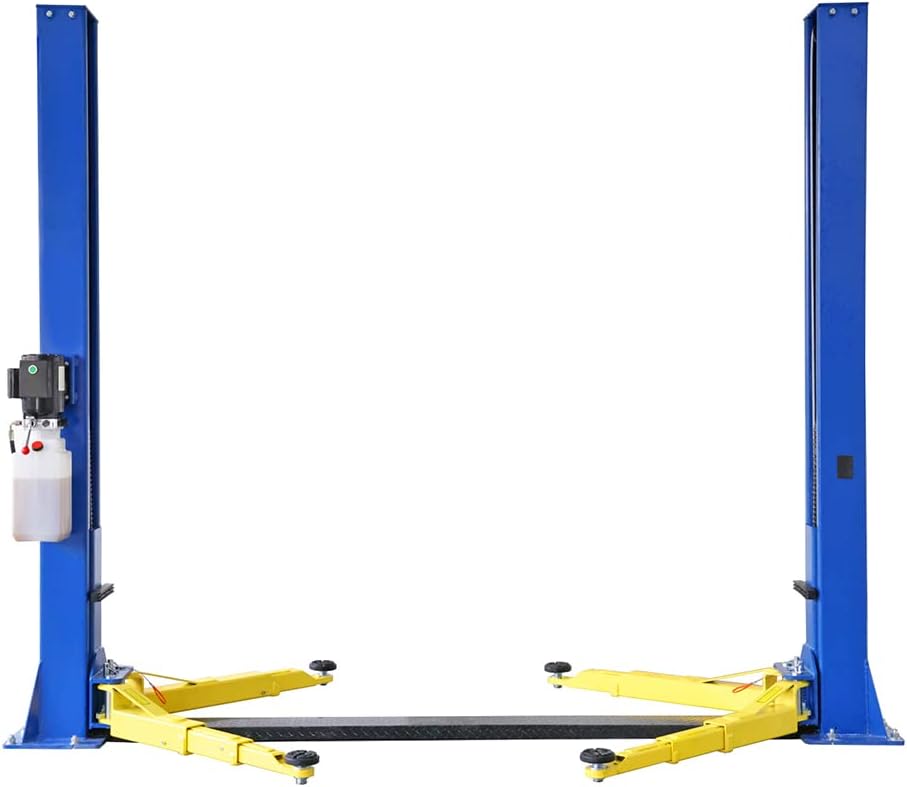
A car floor lift is no longer just a tool for lifting vehicles—it’s part of a broader garage system that affects workflow, safety, space utilization, and even customer perception.
As garages shift toward servicing heavier vehicles, EVs, and mixed-use fleets, traditional lift assumptions start to fail. Floor-mounted and floor-integrated lifting systems are stepping in to solve problems that older designs were never built for.
This guide doesn’t just explain what a car floor lift is—it helps you decide whether, why, and how it fits your specific operation.
🧩What Exactly Defines a Modern Car Floor Lift?
A modern car floor lift system is characterized by:
● Floor-level or recessed installation
● Reduced visual and physical obstruction
● Enhanced load distribution across the base
● Compatibility with automated control systems
Unlike overhead lifts, a floor-based car lift prioritizes stability at lower lifting heights—ideal for frequent inspections, underbody work, and daily repairs.
This design is especially attractive for garages where space efficiency and safety consistency matter more than maximum height.
🗺️Mapping Your Needs Before Selecting a Car Floor Lift
Before focusing on specifications, step back and ask:
● How many vehicle types do we service daily?
● Do we prioritize speed, precision, or flexibility?
● Is our space multi-purpose when lifts are not in use?
A car floor lift for garage repair should adapt to your workflow—not force you to redesign it.
This mindset helps avoid overpaying for unnecessary features or, worse, under-specifying critical ones.
⚙️Key Specifications That Shape Car Floor Lift Performance
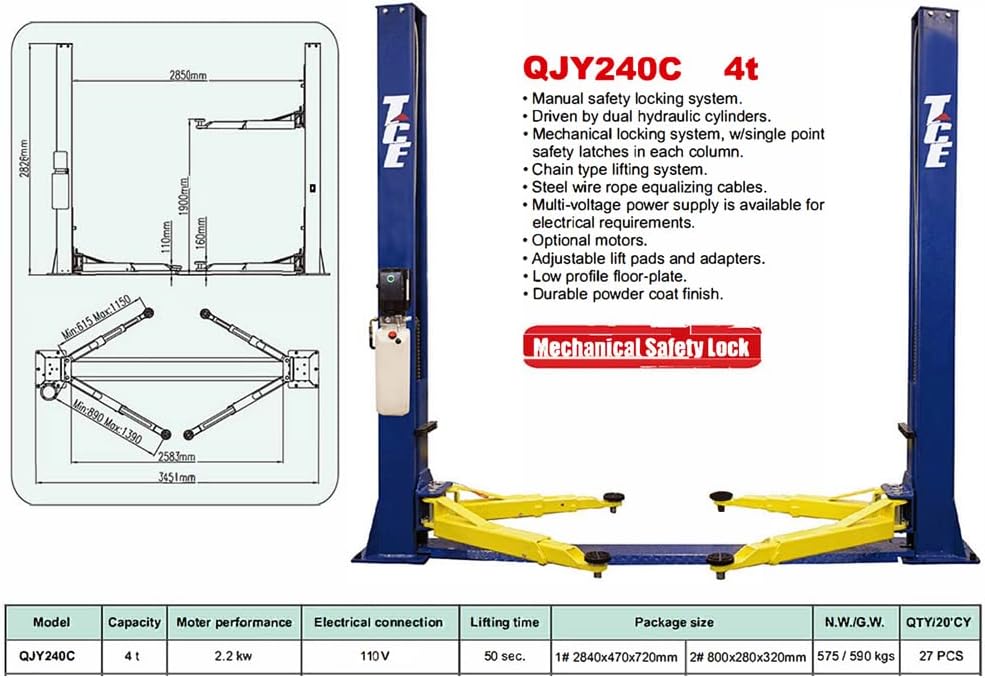
🏋️ Load capacity choices for a 9000 lbs car floor lift
A 9000 lbs car floor lift hits a practical sweet spot. It supports:
● Most sedans and SUVs
● Light commercial vehicles
● EVs with concentrated battery weight
Choosing capacity isn’t just about today’s vehicles—it’s about future-proofing against heavier platforms.
🔩 Why arm configuration matters in a car floor lift
Support arms influence balance, accessibility, and safety.
● Symmetric arms provide consistent load distribution
● Asymmetric arms improve door access and front-heavy vehicle handling
A car floor lift with symmetric and asymmetric arms allows technicians to adapt quickly without changing equipment—an underrated productivity boost.
🧱 Floor integration considerations for a floor-mounted car lift
Floor thickness, reinforcement, and long-term wear all affect lift performance. A well-designed automatic floor plate car lift integrates smoothly into reinforced concrete while maintaining clean floor access when lowered.
🧠Practical Buying Factors Most People Overlook
Beyond specs, consider:
● Downtime risk if one lift fails
● Ease of maintenance access
● Availability of replacement parts
● Manufacturer support and documentation
Garages that scale successfully tend to invest in reliable car floor lift equipment rather than chasing the lowest upfront price.
You can explore multiple configurations here to match different use cases:
🛠️ Common Car Floor Lift Issues and How to Avoid Them
Many reported issues trace back to:
● Incorrect floor preparation
● Misaligned support arms
● Contaminants affecting floor plate movement
A well-engineered automatic car floor lift system reduces these risks through sealed hydraulics, reinforced locking, and balanced lifting geometry—but correct installation is still essential.
🌍 Real Applications Where Car Floor Lifts Excel
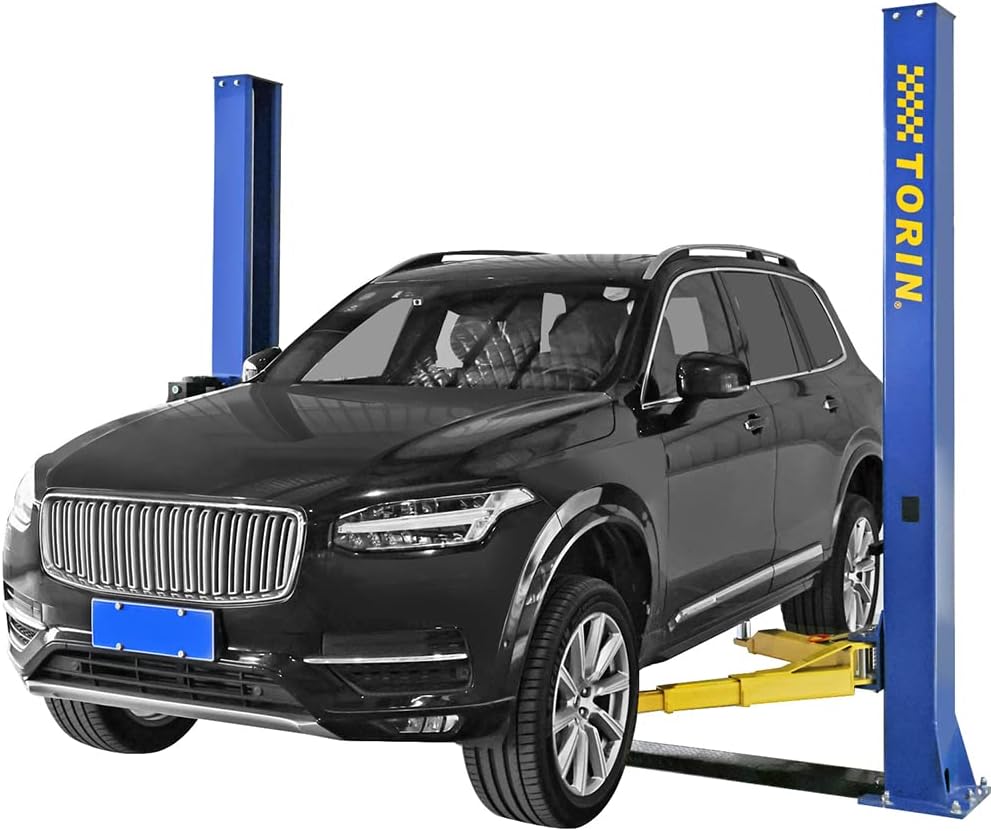
Car floor lifts are increasingly used in:
● Independent repair workshops
● EV service centers
● Fleet maintenance hubs
● Performance and tuning garages
● Premium residential garages
Their ability to disappear into the floor when not in use makes them ideal for multi-functional spaces.
For a technical deep dive into this product category, see:
👉 The Quiet Upgrade Every Home Garage Needs: Auto Floor Lift
🧼 Using and Maintaining a Car Floor Lift Correctly
Best practices include:
● Visual checks before each lift
● Keeping floor plates clean and unobstructed
● Monitoring hydraulic response consistency
● Scheduling annual professional inspections
Consistent care ensures your automatic car floor lift remains safe and efficient over years of use.
❓FAQ
1️⃣ Is a car floor lift suitable for mixed vehicle types?
Yes. Especially models with adjustable symmetric and asymmetric arms.
2️⃣ Can a car floor lift handle EV weight distribution?
A properly rated 9000 lbs car floor lift is well-suited for EVs.
3️⃣ Does a floor-mounted car lift save space?
Absolutely. A low-profile car floor lift minimizes overhead and visual clutter.
4️⃣ Is automation necessary?
Automation improves consistency and safety, particularly in high-volume garages.
5️⃣ How long does installation usually take?
Once the floor is prepared, installation is typically efficient with professional support.
⭐Why AutoHydra’s Car Floor Lift Is Worth Considering
AutoHydra’s 2-post rear-mounted car floor lift is designed around real workshop demands rather than lab-only specs.
It stands out by combining 9000 lbs load stability, dual arm configuration flexibility, and smooth automatic floor plate operation—features often split across multiple competing models.
Where many alternatives compromise either accessibility or automation, AutoHydra focuses on balanced performance, making it suitable for both professional repair shops and advanced private garages.
🛒Ready to Build a Smarter Garage with a Car Floor Lift?
🔔 Make the upgrade when it actually matters
If your garage is handling more vehicles, heavier platforms, or tighter schedules, now is the right moment to upgrade to a modern car floor lift.
AutoHydra offers multiple configurations backed by practical engineering—not just marketing specs.
👉 Explore available options here:
Recommended News